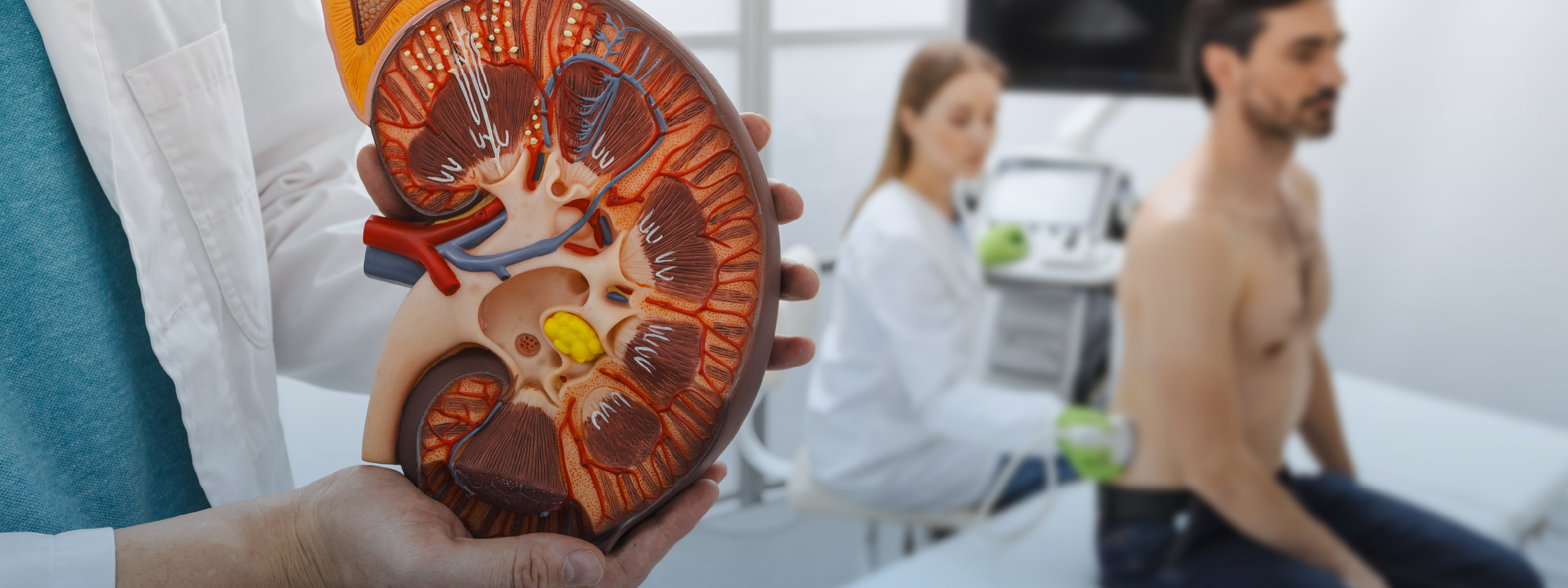
Kidney stones are one of the most common — and painful — conditions we treat in Dubai. The region’s hot climate and low daily water intake make residents especially prone to them. The good news is that treatment has come a long way. Most people are back to normal life within days.
Whether you are dealing with sudden, severe pain or a stone found by chance during a scan, this guide walks you through everything: how stones are diagnosed, which treatment fits your situation, and how to stop them from forming again.
What Are Kidney Stones and How Do They Form?
Kidney stones are hard lumps made of minerals and salts that build up inside the kidneys. They form when urine becomes too concentrated — allowing minerals to crystallise and clump together. Stones can stay in the kidney or travel down to the bladder.
There are four main types:
The most common type. Usually made of calcium oxalate.
Forms when you don’t drink enough water or lose fluids quickly.
Linked to urinary tract infections. Can grow large quickly.
Rare. Caused by an inherited condition affecting the kidneys.
What Are the Symptoms of Kidney Stones to Watch For?
- Sudden, sharp pain in your back, side, or lower abdomen
- Pain that comes in waves and changes intensity
- Burning or pain when you urinate
- Pink, red, or brown urine
- Needing to urinate more often than usual
- Nausea or vomiting
Note: See a doctor straight away if you have: Fever with chills, uncontrollable pain, or trouble passing urine. These can point to an infection or blockage that needs urgent care.
How kidney stones are diagnosed in Dubai?
Getting the right diagnosis is the first step. Our urology team uses a combination of scans and lab tests to find the stone, measure it, and work out what it’s made of — all of which affect treatment choices.
- CT scan (no contrast)
- The most reliable way to find stones of any size. Gives a detailed picture of the whole urinary tract. This is usually the first scan recommended.
- Ultrasound
- No radiation. A good option for pregnant women or for follow-up checks. Widely available and quick.
- Blood and urine tests
These reveal mineral levels in your body and help explain why the stone formed. If you pass a stone, we can test its composition to build a prevention plan.
What Kidney Stone Treatment Options Are Available in Dubai?
The right treatment depends on the size of your stone, where it is, and what it’s made of. Here are the three main options used at our Dubai clinic:
No incisions
Shock wave treatment (ESWL)
Sound waves are sent from outside the body to break the stone into fine particles, which then pass out naturally in your urine. No cuts, no cameras — done as a day procedure.
Best for: Small to medium stones in the kidney or upper ureter. Recovery: 1–2 days.
Minimally invasive
Laser treatment (ureteroscopy)
A thin, flexible camera is guided through the urethra and bladder to reach the stone. A laser then breaks the stone into small pieces, which are removed immediately. No cuts needed.
Best for: Stones in the lower ureter or those too hard for shock waves. Recovery: 2–3 days.
Keyhole surgery
Keyhole removal (PCNL)
A small cut is made in the back so a thin scope can be inserted directly into the kidney. The stone is broken up and removed in one procedure. This is used for large or complex stones.
Best for: Large or branching stones that can’t be treated any other way. Recovery: 5–7 days.
Quick comparison
Treatment | Type | Recovery | Best for |
Shock waves (ESWL) | No incisions | 1–2 days | Small/medium stones |
Laser (ureteroscopy) | Minimally invasive | 2–3 days | Ureteral stones |
Keyhole (PCNL) | Keyhole surgery | 5–7 days | Large/complex stones |
What Can You Expect During Recovery From Kidney Stone Treatment?
Most people recover quickly after modern kidney stone treatment. Here’s what helps the process go smoothly:
- Drink plenty of water. Aim for 2–3 litres a day. This helps flush out any remaining stone fragments.
- Take your prescribed pain relief. Some mild discomfort is normal as small fragments pass.
- If you have a stent, don’t worry. Sometimes a small tube is placed to keep the ureter open. It’s removed at a short follow-up visit, usually within a week or two.
- Attend your follow-up. A check-up scan confirms all fragments have cleared.
 20+ years of exp