
Mobile App icon
Enhanced Experience
on our Mobile App

Going Mental Over Dental Issues? Here’s What You Need to Know About Nursing Bottle Caries

Your child’s smile can light up the world… or be damaged if proper care doesn’t start early. Getting those pearly whites shiny and healthy over time depends on how well they’re built on a foundation of healthy habits from infancy.

Cavities and tooth decay are currently the most common dental issues among children, with nearly 90% of children affected globally, according to the World Health Organization (WHO). Beyond everyday cavities, parents also have two bigger challenges to watch for: Nursing Bottle Caries (baby bottle tooth decay) – prolonged exposure of a child’s teeth to sweet liquids that leads to misalignment and crowding – and thumb sucking.

What Happens If a Child Loses a Tooth Early to Decay?

If your little one loses a tooth to decay (yes, that unwatched chocolate or syrupy milkshake plays a part) or if there isn’t enough space before the permanent tooth comes in, nearby teeth can tip or shift to fill the gap. This creates tooth misalignment, which is often why a new tooth emerges at an odd, crooked, or distorted angle – leading to painful problems when chewing.

When this happens, dentists at HealthHub Clinics by Al- Futtaim often recommend a space maintainer: a plastic or metal device that holds open the space left by the missing tooth. It’s removed once the permanent tooth starts to show signs of coming through.

What Is Nursing Bottle Caries?

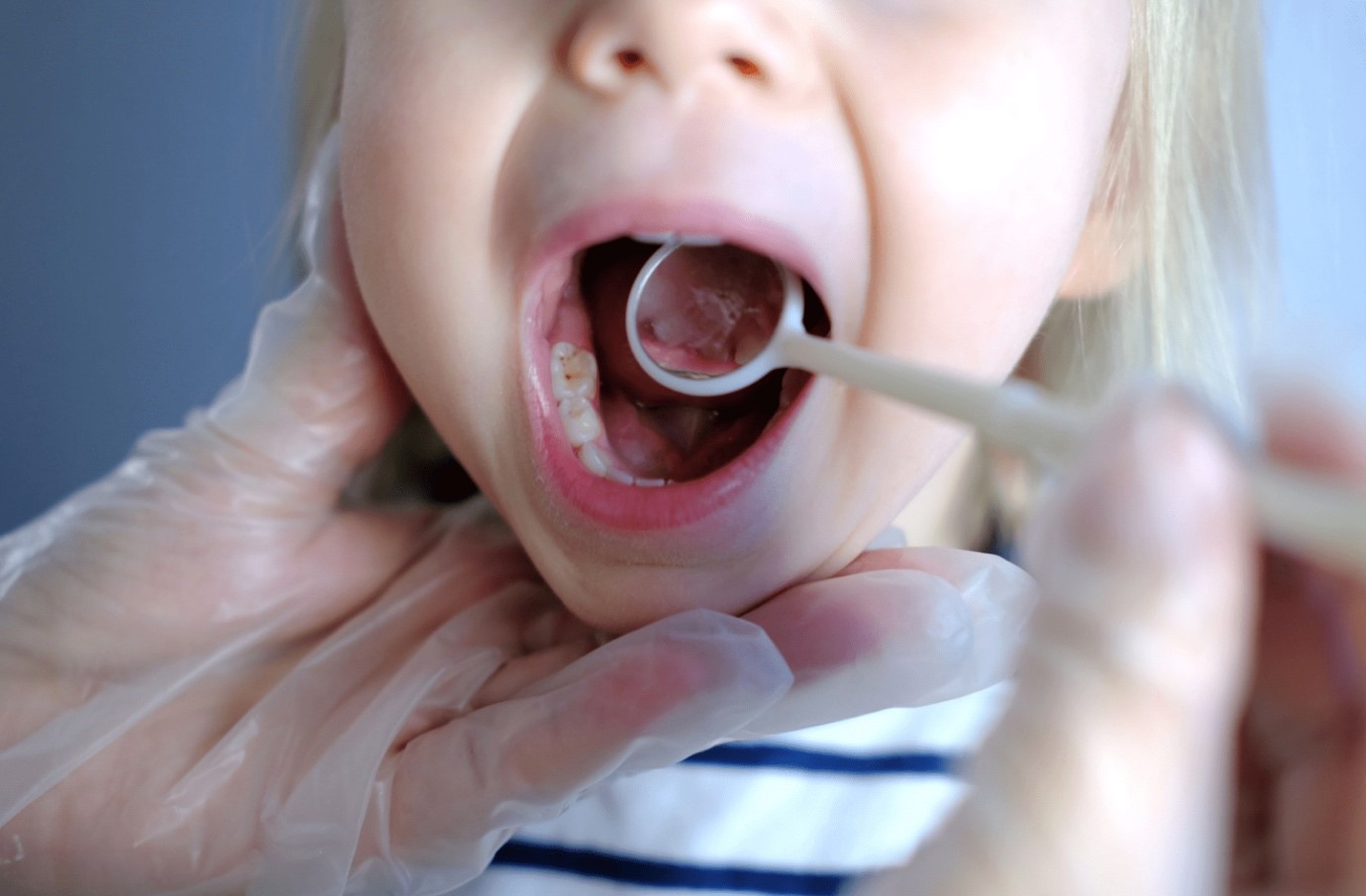
Also called “nursing bottle syndrome” or “baby bottle tooth decay,” nursing bottle caries is a dreaded tooth disorder that develops when children’s teeth are constantly exposed to sugary foods – from fruit drinks to milkshakes.

One commonly overlooked risk factor: breastfed infants can fall asleep with unswallowed milk still in their mouths, putting them at risk of decay. If left unchecked, bacteria in the mouth feed on the sugars in the milk, and with the mouth staying moist for a prolonged period, those bacteria multiply. The result is decayed teeth that can be painful and make chewing and eating difficult.

If baby teeth are damaged at this early stage and don’t receive adequate care, it can lead to an improperly aligned permanent set of teeth – crowded or crooked adult teeth down the line. In more serious cases, rotten baby teeth can cause infection and pus within the roots, which may spread into the bloodstream and cause long- term damage elsewhere in the body.

How Can Parents Prevent Nursing Bottle Caries?

A few practical habits go a long way in reducing the risk:

Watch that sugar. Avoid giving your baby a bottle filled with sugary drinks or milk during the day, especially when they’re restless. Even watered- down fruit juice or milk raises decay risk – offer plain water or a pacifier instead.

Watch that pacifier. Never dip a pacifier in honey or any sweetened liquid.

Keep a night watch. When nursing at night, check that your baby’s mouth has moved away from the breast as they fall asleep.

Watch out for plaque. After each feed, wipe your baby’s teeth and gums with a wet gauze or moistened cloth – this area is prone to bacteria- forming plaque and sugar buildup.

Ensure fluoride dental care. Speak with the dentists at HealthHub Clinics by Al- Futtaim about fluoride for your baby. If your drinking water isn’t fluoridated, over- the- counter fluoride treatments or supplements may be recommended.

Teach an early habit. Once your baby turns one, shift toward sipping from a cup, which helps reduce sugar exposure. Keep in mind: constant sipping can still cause decay unless the cup contains plain water.

Is Thumb Sucking Bad for a Child’s Teeth?

There’s no need to frown if you catch your child sucking their thumb or finger – it’s a normal, healthy habit for infants. Studies show that sucking on objects like a thumb or pacifier gives children a relaxed emotional state and a sense of comfort.

Dental issues around thumb sucking tend to surface once a child grows beyond age 5, especially as permanent teeth start coming in. The impact depends on the frequency, intensity, and duration of the habit – all of which can push teeth out of their natural position, causing them to protrude and resulting in an overbite. Beyond the physical effects, this can also affect speech, making it harder for a child to pronounce certain sounds correctly.

How Can Parents Help a Child Stop Thumb Sucking?

Since thumb sucking is a natural reflex, one of the biggest mistakes parents make is trying to forcefully change the habit – through scolding, nagging, or punishment. The more pressure applied, the more defensive a child can become, which works against the goal.

What to avoid:

One of the biggest mistakes to make is to forcefully try and change the habit of thumb sucking, such as scolding, nagging, or punishments. You must remember that it is a natural habit and the more you try to get a child to rid the habit, the more defensive he or she can be, which in turn defeats the whole purpose of correction.

What to do:

Try the ‘rewards approach’ for your child in giving up the habit of thumb sucking. Here are a few subtle, yet practical ways to do it:

  • Use a neon-coloured band-aid to cover the finger or thumb as a reminder for the child to avoid sucking. After your child falls asleep, you can gently take the finger out of the mouth.
  • Try finding out why your child is engaging in it and try and pay careful attention to the issues or obstacles your child faces that’s causing this habit. It will help you find out how best you can help correct the situation.
  • As an alternative, consider using clever dental devices that can help prevent this habit. There are versatile solutions involving using devices that can be attached to the upper teeth, fixtures to the upper roof of the mouth. They work like a placebo effect through a reversal strategy: making thumb sucking tougher and a less pleasant experience for your child forcing them to eventually give up the habit.
  • Toothbrushing is really a lost art in today’s world, especially among children who have not been giving the knowledge behind the importance of it as an early foundation to have. Our dentists recommend brushing your child’s teeth at least twice a day for two minutes using a fluoride toothpaste. Remember to replace toothbrushes once every 4 months, as microbes and bacteria from your mouth can collect on them.
  • While brushing is important, dental flossing is a must-have habit to help remove plaque or food particles lodged in your teeth and the bacteria that accumulates from areas that a toothbrush cannot reach.
  • Oral health check-ups are never a one-time visit. The general practice for ensuring healthy oral hygiene is for children to have their first dental visit by their first birthday, while adults should do their check-ups with our dentists at HealthHub Clinics once in 6 months, especially as they get older.
  • Your diet counts! Whether it’s your child or even you, what you eat makes such an impact on your overall physique, but also particularly so, in your mouth! We are talking avoiding all those sugary syrups, pancakes and waffles, chocolate sundaes, ice creams, honeyed cookies…you get the picture. Everything that can cause acids to eat into your tooth.
  • Our dental experts recommend fluoride treatments to strengthen teeth and prevent cavities and tooth decay, not to mention whitened healthier teeth!
  • If you child regularly engages in sport or activities that may have the risk of causing mouth or dental injuries, make sure you provide a mouthguard and helmet for protection.
  • To ensure you keep smiling and to know more about healthy oral hygiene or to speak to any of our dental experts at HealthHub Clinics call on 8004322 today to book an appointment right away!