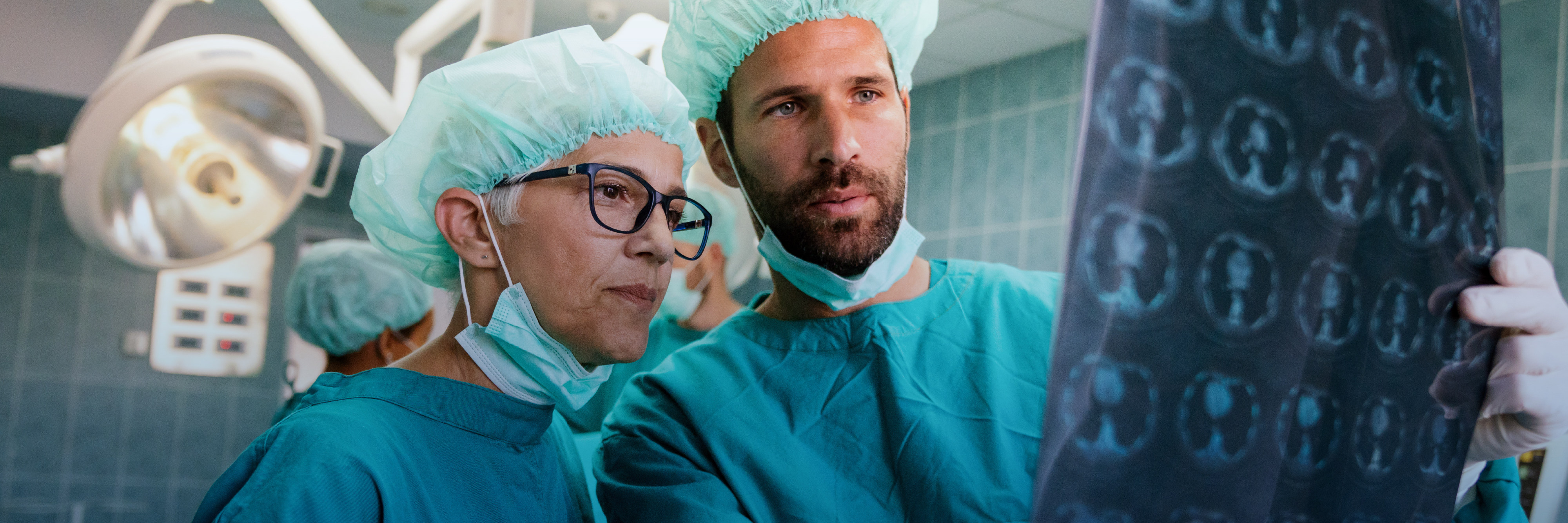
What Conditions Can Keyhole Spine Surgery Treat?
Our neurosurgeons use minimally invasive techniques to treat many common spine problems. These include:
- Herniated (slipped) discs. A disc is a soft cushion between the bones of your spine. When it bulges or breaks open, it can press on nearby nerves. This often causes pain that travels down the arm or leg.
- Spinal stenosis. This is a narrowing of the spinal canal. It squeezes the nerves and can cause pain, numbness, or weakness. It is common in people over 50.
- Sciatica. This sharp, shooting pain runs from the lower back down the leg. It happens when the sciatic nerve is compressed.
- Degenerative disc disease. Discs naturally wear down with age. Worn discs can become painful and unstable.
- Spondylolisthesis. This occurs when one spinal bone slips forward over another. It can cause back pain and nerve symptoms.
- Spinal instability. Some patients need spinal fusion to steady the spine. Many fusions can now be done through keyhole methods.
Not sure if your condition is listed here? Our specialists are happy to review your case and guide you.
Which Keyhole Spine Procedures Do We Offer?
At HealthHub Clinics, our neurosurgery team performs a range of minimally invasive procedures. Your surgeon will explain which option suits your condition best.
Microdiscectomy. The surgeon removes the part of a slipped disc that presses on a nerve. This eases leg or arm pain quickly in most patients.
Endoscopic discectomy. A very thin camera, called an endoscope, enters through a tiny cut. The surgeon removes the damaged disc material while watching on a screen.
Minimally invasive decompression. The surgeon creates more space for squeezed nerves. This helps patients with spinal stenosis walk and stand with less pain.
Minimally invasive spinal fusion. Two or more spinal bones are joined to stop painful movement. Small implants and screws are placed through keyhole openings.
Kyphoplasty and vertebroplasty. These procedures treat painful spinal fractures, often caused by weak bones. Medical cement is injected to support the broken bone and ease pain.
What Are the Benefits of Keyhole Spine Surgery?
Why do patients and doctors prefer minimally invasive spine surgery when it is suitable? Research and clinical experience point to several clear benefits:
- Smaller cuts and less scarring. Openings are often under two centimetres.
- Less damage to muscles. The muscles are moved aside, not cut.
- Less pain after surgery. Many patients need less pain medicine.
- Lower blood loss. Smaller openings mean less bleeding during surgery.
- Lower risk of infection. Small wounds are easier to protect and heal faster.
- No overnight stay for many patients. Most keyhole procedures are done as day surgery. You can often go home the same day.
- Faster recovery. Most people return to light activity within weeks, not months.
It is important to be honest, too. Keyhole surgery is not right for every patient or every condition. Some complex spine problems still need open surgery. Our surgeons will always recommend the safest and most effective option for you.
After diagnosis, we will tailor a treatment plan to your specific condition and needs. Treatment may include medications to manage symptoms or address the underlying cause (for example, immunotherapies for autoimmune disorders or drugs to improve nerve-muscle communication). Rehabilitation is also a key component of our approach. Our team works closely with physiotherapists and occupational therapists to help you improve strength, mobility, and daily functioning. If needed, we involve other specialists – such as speech therapists for swallowing difficulties or respiratory therapists for breathing support – ensuring multidisciplinary care. We continue to follow up regularly, adjusting your treatment as needed and supporting you and your family as you adapt to life with a neuromuscular condition.
What Can You Expect During Your Treatment Journey?
We know that surgery can feel daunting. Our team supports you at every step, from your first visit to your final check-up.
Step 1: Consultation and diagnosis. Your journey starts with a detailed consultation. Our neurosurgeon listens to your story and examines you carefully. We may arrange scans, such as an MRI, to see your spine clearly.
Step 2: A personalised plan. Surgery is never our first suggestion unless it is truly needed. We often begin with non-surgical care, such as physiotherapy or pain management. If surgery is the right choice, we explain everything in plain language. You will know what the procedure involves, its benefits, and its risks.
Step 3: The procedure. Most keyhole spine procedures take one to a few hours. You will receive anaesthesia so you stay comfortable throughout. Many procedures take place in our advanced day surgery unit. This means you can usually return home the same day, without an overnight stay. If your treatment needs a hospital setting, we arrange everything for you at a carefully selected partner facility. Your HealthHub surgeon and care team stay with you at every stage. You will never have to organise anything on your own.
Step 4: Recovery and rehabilitation. Many patients are up and walking within hours of surgery. Our team gives you a clear recovery plan. This may include gentle exercises and physiotherapy to rebuild strength. All your follow-up care happens at HealthHub Clinics, close to home. We schedule regular visits to track your progress.
 24+ years of exp